It’s clear that technological advancements have helped those of us who work with wildlife by improving species detection, especially for the more cryptic, less common, and/or nocturnal species. For example, when they first appeared, camera traps were revolutionary and helped (and continue to help) in the detection and conservation of species worldwide, with iconic examples of felines or birds found after decades of being thought to be extinct or missing from certain areas.
Of course, technology is constantly improving, and we can’t afford to fall behind. That’s why at CicloFauna, we’re committed to using all the equipment that allows us to improve our work and, moreover, minimize our impact on wildlife in the field.
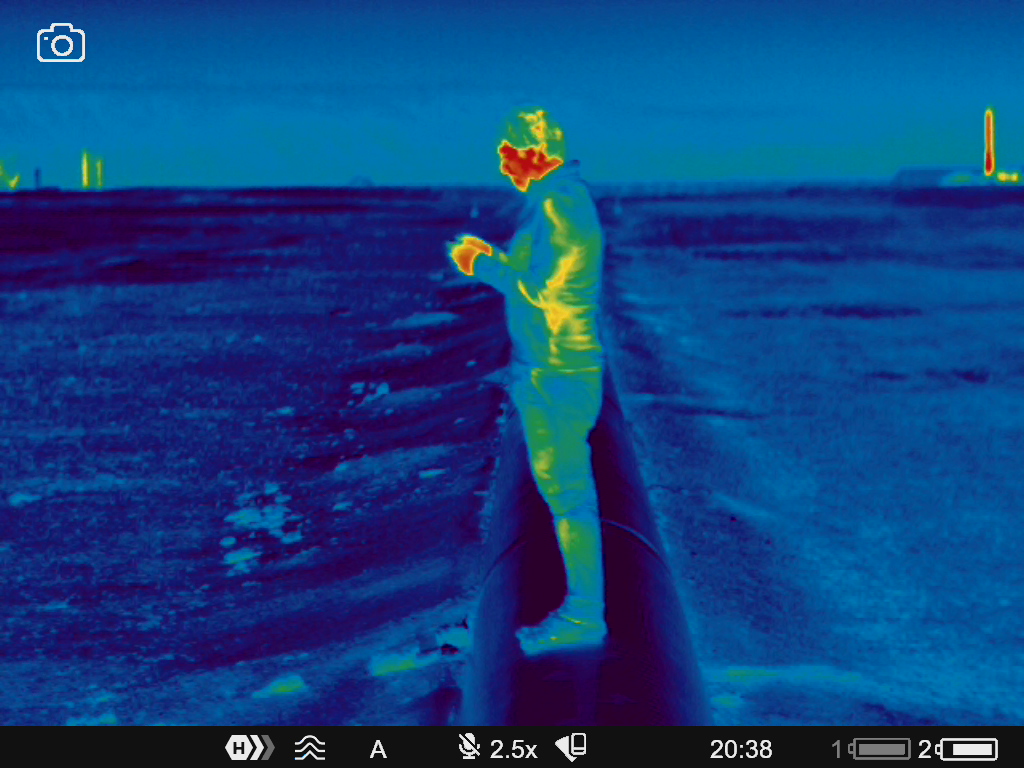
Thermal binoculars are a very useful tool for this purpose, as they allow us to directly observe any animal from a great distance and even capture photographic and video recordings for later use. They are easy to use and some models also allow the images to be viewed, through an application, on other devices such as cell phones and tablets, thus allowing other people to observe at the same time what the person carrying the binoculars is seeing.
These devices help us locate animals in total darkness by detecting their body temperature, and the images they provide are of high quality. They not only reveal heat sources but also allow us to observe, through digital imaging, everything in front of us, in color scales (cool, warm, or black and white).
Thus, their application is quite broad in wildlife consulting, as they can be used for nighttime species detection during baseline studies or environmental characterizations, as a complementary method for bat characterization, in nocturnal bird transit surveys, and for specific studies of desert-nesting birds, since they allow the detection of adults, chicks, and even eggs.
CicloFauna, March 2026.