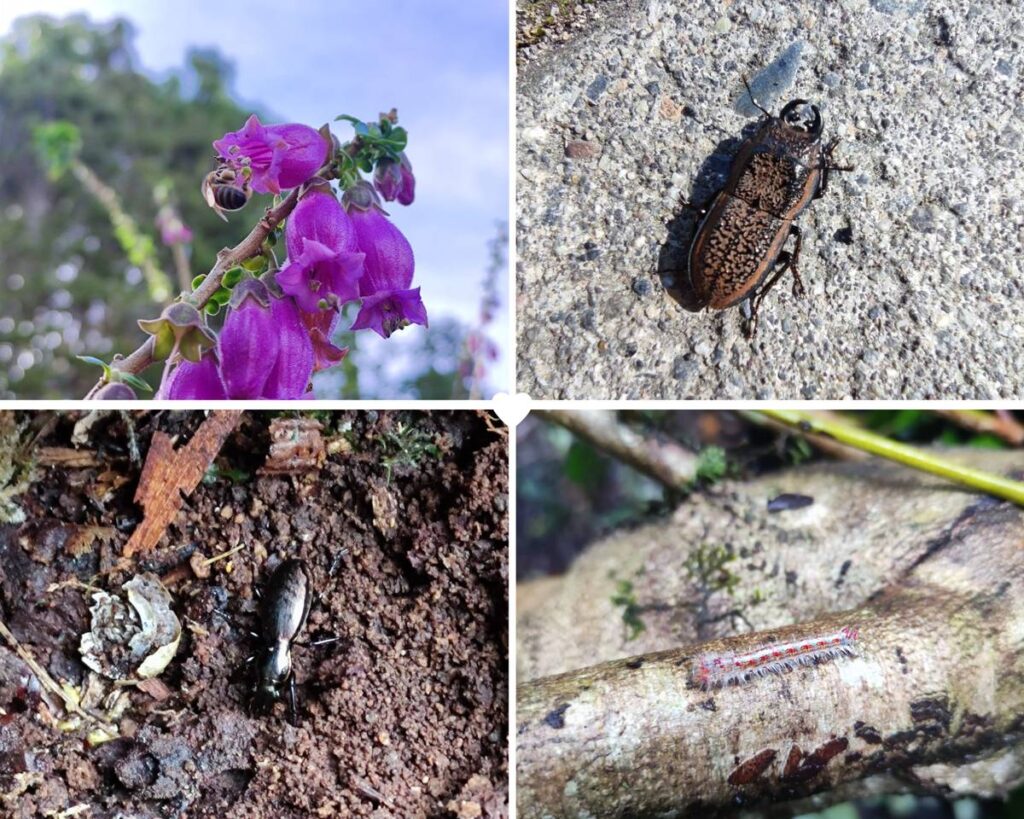
Did you know that there are more than 14,000 different insect species in Chile and most of them are only found in our territory? And yet, we are one of the South American countries with the least species diversity! Even so, the ones we all know are very few and often unpopular: flies, horseflies, and mosquitoes seem to cause us nothing but annoyance. But the reality is that the importance of each and every insect is crucial for maintaining ecosystems throughout the country. We often read that bees are essential for pollinating many of the fruits and vegetables we consume, and that’s true, but they are not the only ones that provide this important ecosystem service (a benefit that an ecosystem provides to society that improves people’s health, economy, and quality of life—services that result from the very functioning of ecosystems). In Chile, we have many species of flies, blowflies, wasps, butterflies, beetles and jewel insects, among others, that also pollinate a wide variety of native plants and crops. And although this work may be the most visible and obvious, it is not the only one.
Insects are present in all terrestrial ecosystems and continents on Earth (yes, even in Antarctica there are a couple of species). They perform functions as detritivores, herbivores, fungivores, soil engineers, predators, and prey of other invertebrates and insectivorous vertebrates. In this way, detritivorous insects, such as some beetles and grasshoppers, participate in the decomposition of dead organic matter, whether wood, dry leaves, feces from other animals, or carcasses, cleaning the soil of all these materials. Many other insects, such as various species of hemipterans and dipterans, consume different parts of plants (leaves, bark, fruits, seeds, roots) and living fungi, thus controlling and strengthening their growth. Still other species, like ants, shape the subsoil, influencing its moisture and aeration, allowing the growth of other fauna and flora, activating or inhibiting the function of microorganisms, and introducing essential nutrients. Finally, predatory insects, such as dragonflies and some beetles, control the populations of other invertebrates, thus limiting the emergence of pests.
Therefore, understanding and conserving all these species is crucial for maintaining our ecosystems and, in turn, all the life around us.
CicloFauna, October 2025.