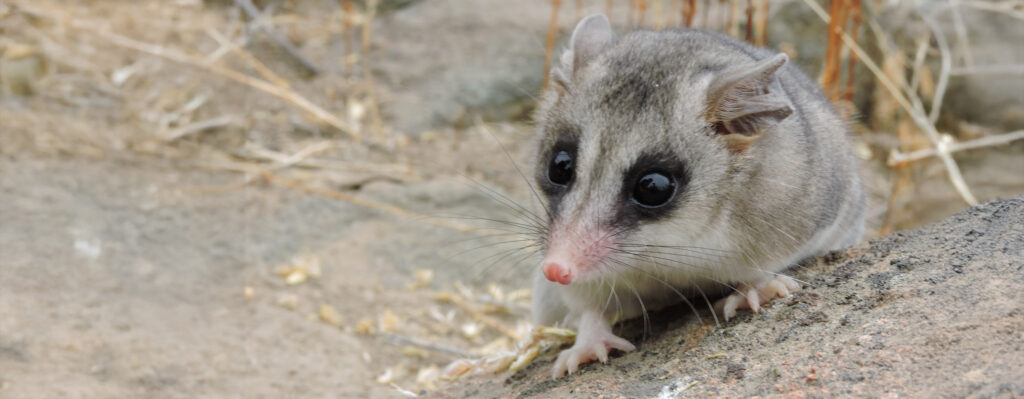
When someone decides to work in wildlife conservation, they face numerous obstacles, such as a lack of financial resources, limited research funding, and the complexity of working with species that are very difficult to detect, among many others. But there is a fundamental and often overlooked difficulty: breaking down barriers imposed by people toward animals, reflected in a negative perception of some of them.
Day after day, those of us who work with wildlife must explain why we work with species that are “ugly,” “dirty,” “unlucky,” or “useless”—labels imposed by history, religion, beliefs, and the transmission of information among people.
It is very common to hear erroneous assertions, such as that some toads can give you warts, that the call of an owl brings bad luck, that bats are mice with wings, or that rodents are unclean. But where does all this come from? By looking into the literature, it is easy to find a cultural, historical, or religious basis. It’s possible to find unkind words about certain animals when reviewing biblical passages, describing them as dirty, unpleasant, or harbingers of bad luck. People are convinced that mice cause a lot of harm because of the history associated with the bubonic plague or alarming media reports about the Hanta virus. How many of us heard in school, even from our teachers, that bats are winged mice or that touching an amphibian causes our skin to break out in warts? Because of this misinformation, it’s necessary to break down these barriers and debunk these myths.
It is crucial to clarify that all living beings, and particularly our wildlife, have inherent value, meaning they are valuable simply by virtue of existing. While this may seem obvious, it is not always the case in practice, as many people kill rodents, amphibians, or bats out of fear or due to the beliefs already mentioned, without considering whether there are threatened, endemic, or unique species on the planet.
In addition to what has already been mentioned, these poorly understood animals provide us with ecosystem services, acting as seed dispersers, pollinators, insect pest controllers, and food sources in food chains. What would become of Chile and the millions of dollars generated annually by tourism and visits to protected wilderness areas if there were no wild rodents, amphibians, or bats? We would likely not have the opportunity to admire and enjoy the forests, ecosystems would be disrupted by pests or food shortages, and it would be impossible to photograph charismatic species like the puma, the pudú, or the huemul, as they would lack a suitable habitat and food.
Therefore, at CicloFauna, we propose breaking down prejudices and fostering quality environmental education for all ages. Our fauna has unique characteristics; we possess a high level of endemism and species found nowhere else in the world. That is why we invite you to learn about it, to then appreciate it, and to break down paradigms in favor of the conservation of our fauna and the sustainability of natural resources. We still have time to unite and protect our planet.
CicloFauna, May 2026.